
There’s a strange thing that happens once people get good with money. They don’t start spending more freely. They get pickier. Almost suspiciously picky.
You’d think that once someone has a comfortable bank balance, the floodgates would open. A nicer car. Pricier groceries. The good olive oil instead of the bargain one. But that’s not what actually happens with people who’ve quietly built wealth over time. Instead, they develop what almost looks like an allergy to certain purchases, regardless of how much money they have sitting in the bank.
This isn’t about being cheap. Cheapness is refusing to spend on anything. Frugality is something far more interesting: a finely tuned filter for where money actually creates value and where it just evaporates. The wealthy and the frugal often overlap more than people assume, and the overlap isn’t accidental.
So what exactly do they refuse to spend on? And more importantly, why?
1. Extended Warranties
Extended warranties feel responsible. They feel like the “smart” choice. But here’s the uncomfortable math behind them: insurance companies and retailers only offer products that are profitable for them, which means, on average, they’re not profitable for you. The premium you pay is almost always higher than the expected cost of the repair you’re insuring against.
Frugal people understand a concept that behavioral economists call the “peace of mind tax.” Companies aren’t really selling protection. They’re selling anxiety relief, and anxiety relief has a markup of 200 percent or more in many categories.
2. Brand New Cars (The Moment They Roll Off the Lot)
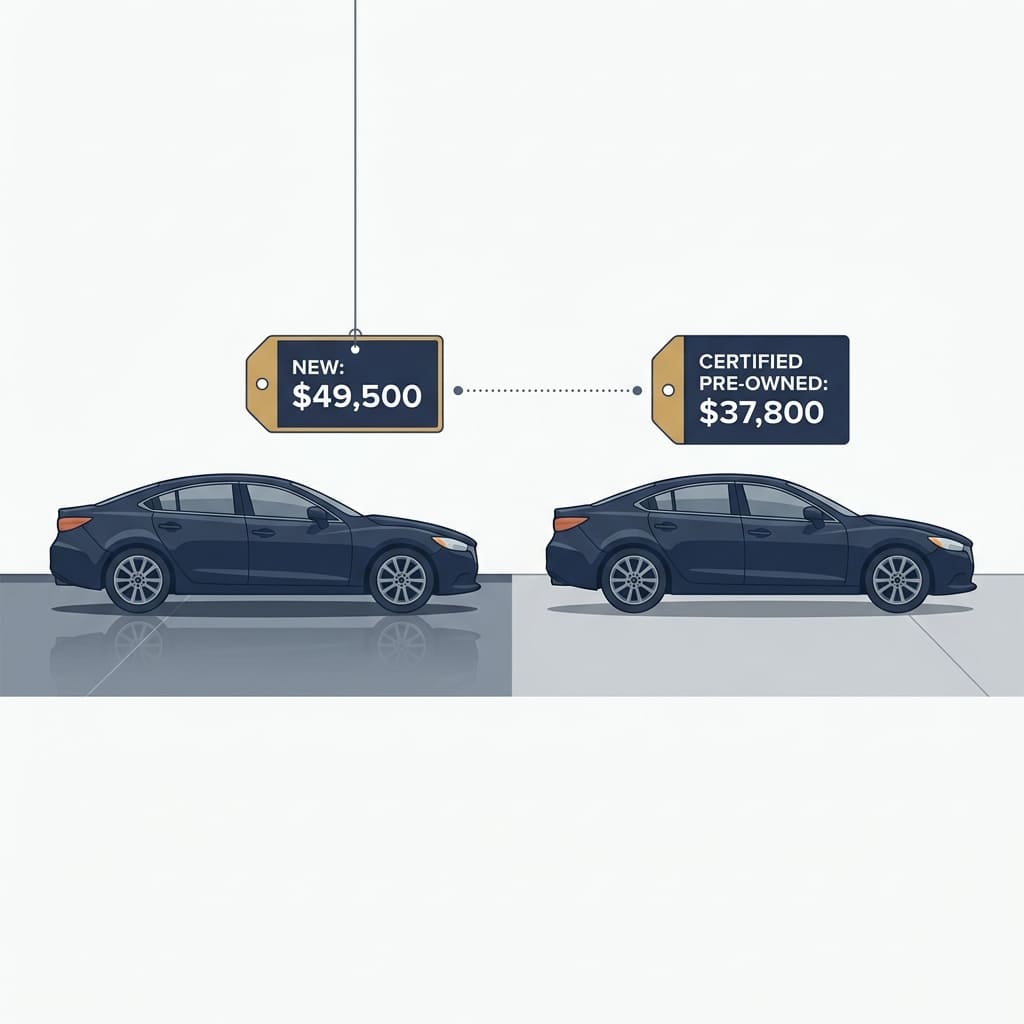
This one feels almost cliché at this point, but the reason behind it is rarely explained well. A new car loses a huge chunk of its value within the first year, not because the car is suddenly worse, but because of a psychological discount buyers apply to anything “used,” even by one day.
What’s the most counterintuitive part? The frugal person isn’t trying to find a “good deal.” They’re exploiting a pricing inefficiency that exists purely because of human perception. The car is identical. The label changed. That’s it.
This exact kind of mental shortcut, where a tiny detail completely flips someone’s decision, shows up everywhere once you start looking for it. It’s the same invisible force behind some of the smartest money moves people made decades ago, long before personal finance apps existed to point it out for them. It’s a pattern we dug into in 11 Clever Ways People Saved Money Before Apps, Coupons, and Cashback Programs Existed, and it explains why some of the “old-fashioned” tricks still quietly outperform modern ones.
3. Premium Cable and Streaming Bundles
Frugal people rarely subscribe to everything. Not because they don’t enjoy entertainment, but because they understand something called “subscription drift,” the slow, almost invisible creep where a person accumulates five, six, sometimes ten recurring charges that individually seem harmless but collectively bleed hundreds of dollars a month.
The scary part isn’t the amount. It’s how invisible it becomes. Most people can’t even list every subscription they’re currently paying for. Frugal people audit this ruthlessly, usually once a quarter, like clockwork.
4. Designer Labels for Everyday Items
This is where it gets genuinely interesting from a psychology standpoint. Frugal people aren’t against quality. They’re against paying for a logo. There’s a well-documented effect in consumer psychology where a brand name physically changes how something tastes, feels, or performs in a person’s mind, even when the underlying product is chemically or structurally identical.
But here’s the twist almost nobody talks about: this bias doesn’t disappear with intelligence or income. PhDs fall for it. Wealthy people fall for it constantly. The only real defense is knowing the trick exists in the first place.
5. Lottery Tickets and “Almost Investing”
Frugal people don’t necessarily avoid all risk. Many of them invest aggressively in index funds, real estate, or businesses. What they avoid is what behavioral economists call “near-investing,” a purchase that feels like a financial decision but is mathematically closer to a tax on hope.
A lottery ticket has a negative expected value so steep that frugal people mentally categorize it with entertainment spending, not wealth-building. It’s a five-dollar movie ticket, not a financial strategy.
6. Anything Bought Purely to “Not Look Poor”
This might be the most psychologically loaded item on this list. There’s a quiet, constant pressure in modern life to signal status, often through small purchases: the right coffee cup, the right phone case, the right gym leggings.
Frugal people have, often through years of trial and error, developed something close to immunity to this pressure. Not because they don’t care what others think, but because they’ve recalculated the actual payoff. Spending forty extra dollars to “look” a certain way to strangers has a return on investment of essentially zero.
Interestingly, this is one of those areas where older generations had a strange advantage. Many of the habits frugal people swear by today are almost identical to tactics used decades ago, before marketing became this sophisticated and saturated. There’s a reason certain old-school money habits have aged so well, something explored at length in 15 Money-Saving Tricks Grandma Used That Still Beat Most Modern Financial Advice. Once you see the overlap, it’s hard to unsee.
7. Brand New Furniture (At Full Retail Price)
Furniture might be the single most overpriced category most people never question. The markup between manufacturing cost and retail price is often staggering, and depreciation hits the moment it leaves the showroom, almost identical to the car effect mentioned earlier.
Frugal people know something that most retail shoppers don’t fully internalize: furniture is one of the few categories where buying “like new” creates almost zero downside, but enormous upside.
8. Bottled Water (When Tap or Filtered Is Available)
This one seems small, almost too small to matter. But frugal people pay attention to recurring micro-expenses precisely because they compound. A daily bottled water habit can quietly cost several hundred dollars a year, for a product that, in most municipalities, is held to similar or even stricter safety standards than what comes out of the tap.
Here’s the part that surprises people: the bottled water industry isn’t really selling hydration. It’s selling convenience and a perception of purity. Frugal people sidestep this entirely with a twelve-dollar filter pitcher that pays for itself within weeks.
9. Premium Gas for a Car That Doesn’t Need It
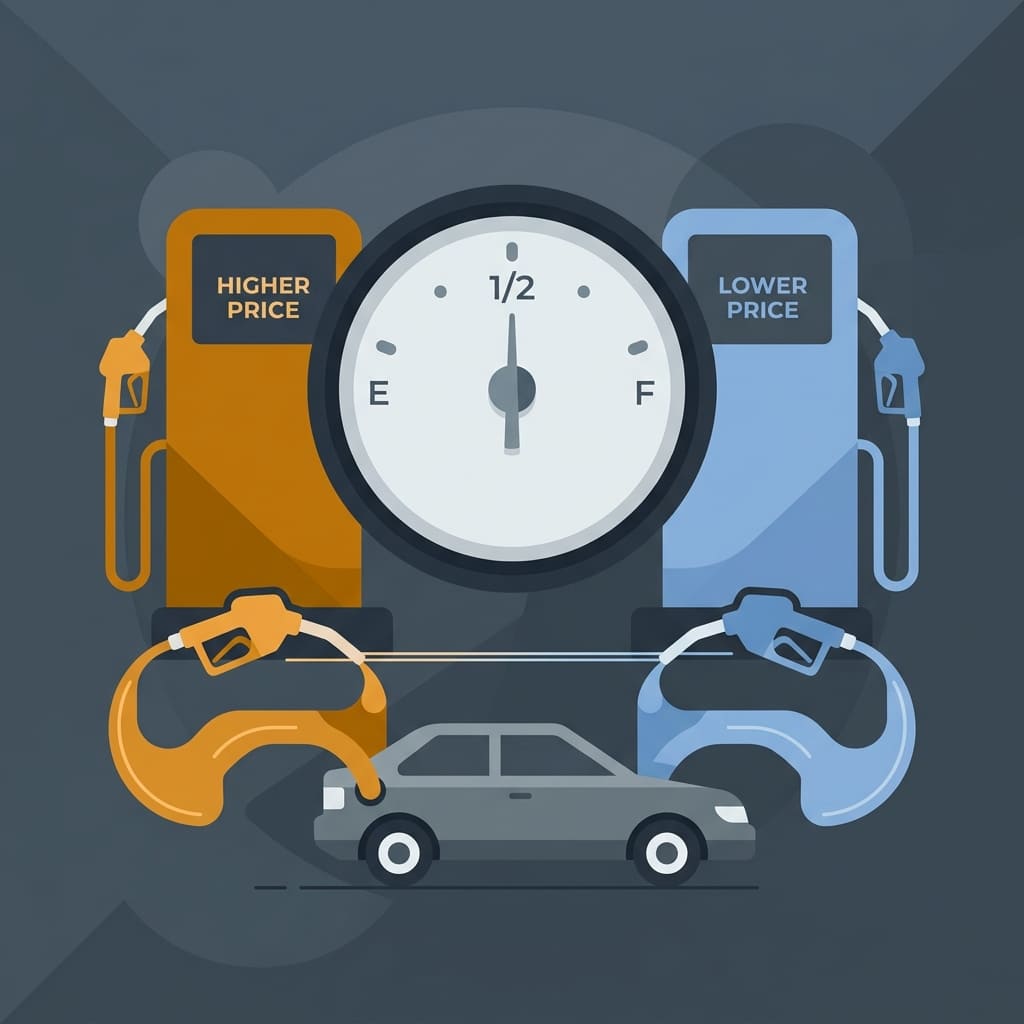
Unless a car’s manual specifically requires premium fuel (usually high-performance or luxury vehicles), paying extra for higher-octane gas does nothing measurable for most engines. It’s a purchase built almost entirely on the assumption that “more expensive” means “better for my car,” when in reality, the engine’s computer is designed around a specific octane rating and simply won’t benefit from anything above it.
Frugal people check their owner’s manual once and never think about it again. Everyone else just keeps paying the premium, indefinitely, for a benefit that doesn’t exist.
10. Anything Bought Under Pressure or Urgency
“Limited time offer.” “Only 2 left in stock.” “Sale ends tonight.” These phrases exist for one reason: artificial urgency overrides rational evaluation. It triggers a part of the brain that prioritizes loss avoidance over value assessment.
Frugal people have trained themselves to recognize this trigger and do something almost mechanical in response: they wait 24 hours. If the desire is still there the next day, they reconsider. Most of the time, it isn’t. The urgency itself, not the product, was the actual sales pitch.
11. High-Fee Investment Products
This is where frugality and serious wealth-building start to merge. Many investment products carry fees that sound small (1 percent, sometimes less) but compound into enormous sums over decades, because fees are taken whether the investment performs well or poorly.
Frugal investors gravitate toward low-cost index funds for a simple reason: a 1 percent fee doesn’t just cost 1 percent. Over 30 years, it can quietly consume a quarter or more of total returns, simply because that 1 percent is also no longer compounding on your behalf. Most people never run this math. The ones who do tend to never look at high-fee products the same way again.
12. Things Bought Solely Because They Were “On Sale”
A discount on something you didn’t need isn’t savings. It’s spending with a discount attached. This sounds obvious written out, but it’s one of the easiest traps to fall into, because the brain registers a markdown as a “win” independent of whether the purchase was useful at all.
Frugal people ask a single filtering question before any sale purchase: “Would I buy this today at full price?” If the answer is no, the discount is irrelevant.
13. Single-Use, Disposable Versions of Reusable Items
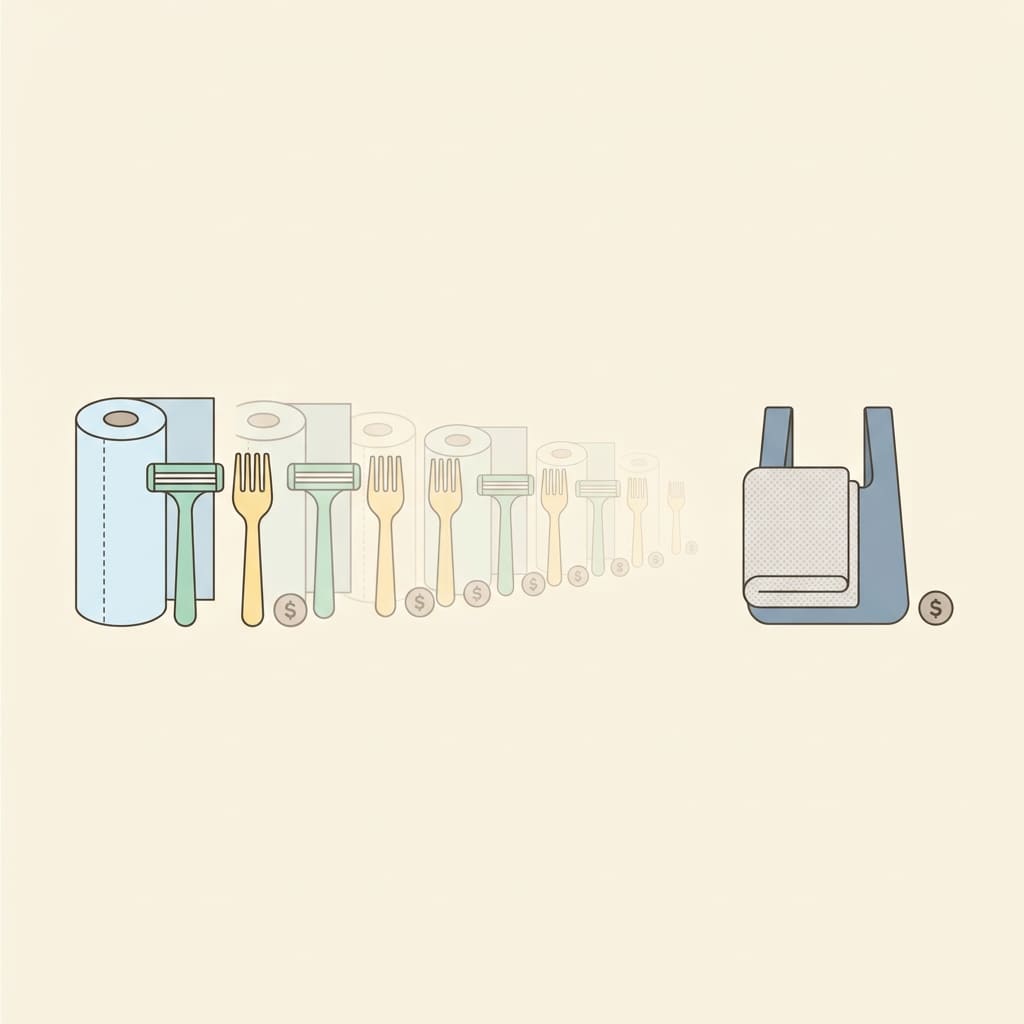
Paper towels instead of cloth. Disposable razors instead of a quality reusable one. Plastic cutlery instead of a basic set. Individually, these feel cheap. Repeated weekly for years, they become one of the more expensive habits a household can have, just spread out so thinly that it never feels like spending.
This is the same blind spot that shows up in a lot of everyday household purchases that, frankly, almost never deserve to be bought new in the first place. It’s a deeper rabbit hole than most people expect, and it’s exactly what we map out in 17 Household Items You Should Almost Never Buy Brand New.
14. Convenience Fees of Almost Any Kind
Delivery fees, ATM fees, expedited shipping, “service charges.” Frugal people treat these less like prices and more like tests. A test of whether the inconvenience is actually worth solving with money, or whether five extra minutes of planning makes the fee disappear entirely.
Most of these fees aren’t covering a real cost. They’re capturing impatience. And impatience, it turns out, is one of the most expensive emotions a person can have.
The Real Pattern Behind All 14
Look closely at this list and a pattern emerges that has nothing to do with cheapness. Every single item shares one trait: it’s a purchase where price and value have quietly come apart. The frugal person’s real skill isn’t restraint. It’s noticing the gap before they pay for it.
That’s a skill anyone can build. It just starts with asking one uncomfortable question before almost any purchase: “Am I paying for the thing, or for the feeling around the thing?”
Once that question becomes automatic, the rest tends to follow on its own.
So, does any of this sound familiar? Did one of these hit closer to home than expected?
If this changed how you’ll look at your next purchase, send it to the one friend who needs to read it too. They’ll probably thank you later, possibly right after they cancel a subscription they forgot they had.