
There was a time when “optimizing your finances” didn’t mean downloading seven apps that all want access to your contacts. It meant knowing how to make a chicken last three dinners and a bar of soap last a month longer than it should.
Long before cashback apps and rewards points, people built wealth through habits, not hacks. And the strange thing is, many of those habits were more effective than what most of us do today.
Here’s the part that surprises people: frugality before the digital age wasn’t about deprivation. It was about systems. Pre-app savers had something most modern budgeters lack: friction. Every purchase required effort, so impulse spending was naturally limited. There was no one-click checkout standing between a thought and a transaction.
That friction is the hidden ingredient most personal finance content ignores. Removing friction (which is exactly what cashback apps and one-tap shopping do) doesn’t just make spending easier. It makes overspending easier too. The tools designed to help you save money sometimes erode the exact behavior that builds wealth in the first place.
1. The Sinking Fund Jar System
Before “envelope budgeting” became an Instagram aesthetic, households used a version that was far stricter: physical jars, each earmarked for a specific future expense. Rent. Shoes. Coal. Once the jar was full, spending stopped. No exceptions, no “I’ll pay myself back next week.”
This is functionally identical to a sinking fund, a concept still used by corporations and municipalities today to spread large future costs into small manageable amounts (you can read how the U.S. Treasury describes amortized debt structures at TreasuryDirect, https://www.treasurydirect.gov). The genius wasn’t the jar. It was the irreversibility. Once money went in, it psychologically left the “spendable” category entirely.
2. Buying One Quality Item Instead of Three Cheap Ones
This idea predates the internet phrase “buy it for life” by at least a century. Frugal households often stretched to buy a single well-made coat, tool, or pair of boots rather than replacing flimsy versions repeatedly.
This connects to something economists call the unit cost fallacy: the mistaken belief that the cheapest sticker price is the cheapest real cost. A $20 item replaced four times costs more than an $80 item that lasts a decade, but it never feels that way in the moment, because the pain of spending happens now and the savings happen later. Your brain weighs the present far more heavily than the future. This is the same bias that explains why people underfund retirement accounts even when they know better.
3. The “Make It Last” Mentality
Stretching the use of household items wasn’t a survival tactic only. It was a wealth strategy. Soap slivers pressed together. Vegetable scraps turned into stock. Worn clothing patched and re-patched.
This habit quietly trains a skill that almost nobody talks about: delayed disposal, the willingness to extract maximum value from something before replacing it. There’s an entire category of modern spending mistakes that come from the opposite instinct, what some call premature upgrading. People replace phones, furniture, and even cars well before the item has stopped delivering value. It turns out grandma’s generation understood depreciation curves intuitively, even without ever graphing one. If you want a deeper look at exactly which categories of items get replaced too soon (and which almost never need to be bought new), that pattern shows up again and again in 17 Household Items You Should Almost Never Buy Brand New.

4. Bartering as a Financial Tool, Not a Last Resort
Before cashback rewards gave you 2% back on a purchase, bartering let people skip the purchase entirely. Eggs for bread. Labor for lessons. Childcare for car repairs.
What’s interesting is that bartering forces accurate value assessment in a way cash transactions don’t. When you trade a dozen eggs for a haircut, both parties have to genuinely agree on relative worth. Cash, by contrast, lets you spend without ever consciously evaluating whether something is worth the number on the price tag. Behavioral economists call this the transparency of exchange, and it’s a major reason barter-heavy households historically built surprising financial resilience even with low cash incomes.
5. The Once-a-Week Shopping Rule
Before 24/7 grocery delivery, people shopped once, sometimes only once every week or two. This wasn’t just about convenience. It was a built-in spending limiter.
Modern research on what’s called the mere exposure effect confirms what these households intuited: the more often you’re exposed to a store or purchasing opportunity, the more often you buy, even when you don’t need anything. Limiting exposure wasn’t a hardship tactic. It was, accidentally, one of the most effective budgeting tools ever devised, decades before “budgeting tools” were a category.
6. Repair Culture as Default, Not Exception
Cobblers, tailors, and tinkers weren’t niche professions; they were the default response to something breaking. Today, repair is often the unusual choice, buried behind a wall of “it’s probably cheaper to just replace it” thinking.
Here’s the counterintuitive part: that thinking is frequently wrong, but it persists because replacement is easier to evaluate. You can compare two price tags in five seconds. Estimating a repair’s value requires judgment, so people default to the simpler decision even when it’s the costlier one. This is a close cousin of what behavioral economists call the path of least resistance bias, and it quietly drains far more wealth over a lifetime than any single bad purchase ever could.
7. The Cash-Only Constraint
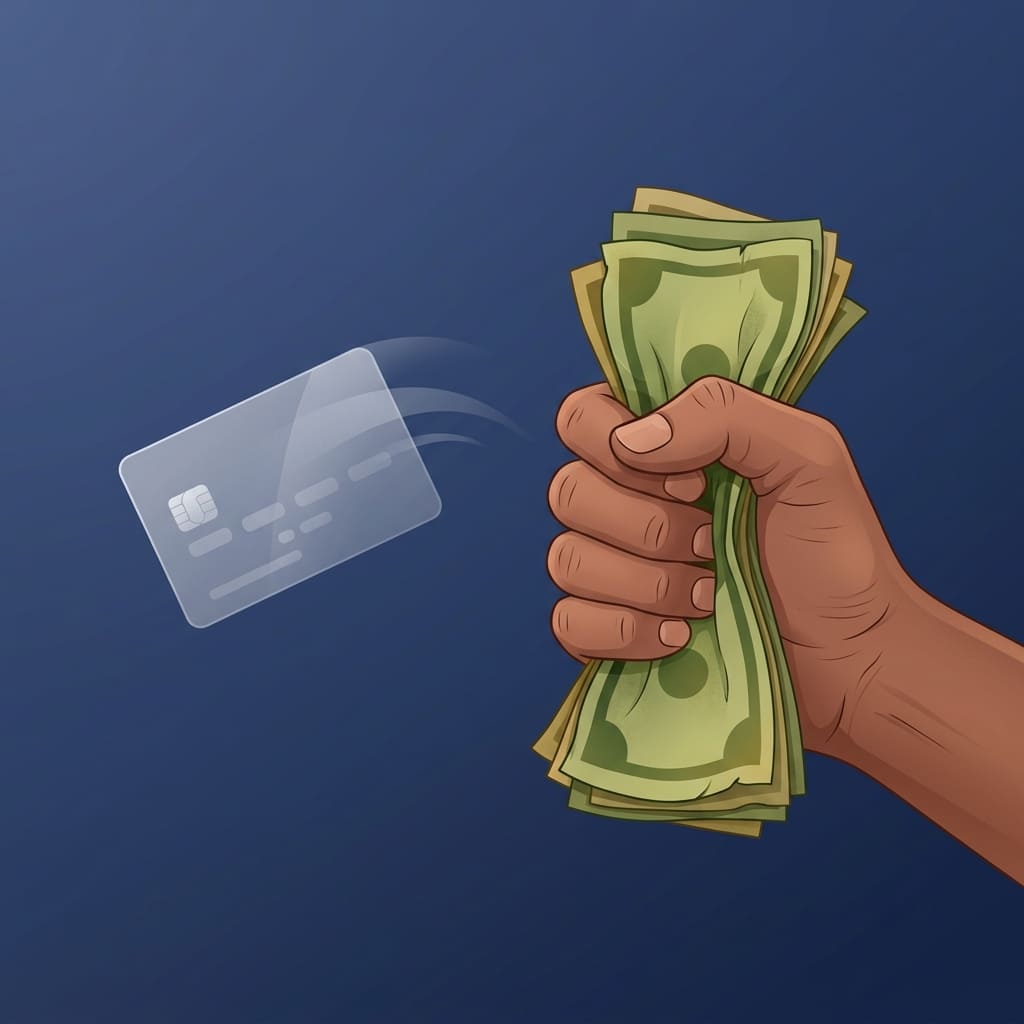
Before debit cards normalized invisible spending, paying in physical cash forced something modern payment methods have engineered away: pain of payment. Studies on this (widely discussed by outlets like Investopedia, https://www.investopedia.com) consistently show people spend less, and feel more, when handing over physical bills compared to tapping a card.
The households that thrived on tight budgets weren’t unusually disciplined people. They were ordinary people operating inside a payment system that made overspending harder. Remove that friction, and discipline alone has to do all the work, which is a much less reliable system. This is also exactly why two people with identical incomes and similar values can end up in completely different financial positions a decade later, a pattern explored in more depth in 13 Purchases That Feel Cheap Today but Become Expensive Regrets Later.
8. Growing or Producing Instead of Buying
Victory gardens are the most famous example, but the underlying habit (producing something yourself rather than purchasing it) extended to soap-making, canning, sewing, and brewing. The financial logic here isn’t just “it’s cheaper.” It’s that producing something yourself builds an accurate internal sense of what things actually cost in time and effort.
People who only ever buy finished goods lose touch with the true cost of production, which makes them far more vulnerable to overpaying without realizing it. This single gap in awareness is part of why marked-up “convenience” products work so well on modern shoppers.
9. Multi-Generational Knowledge Transfer
Financial habits weren’t taught in classrooms. They were absorbed by watching a parent or grandparent manage money under real constraints. This created something modern personal finance content struggles to replicate: contextual learning, where advice arrives exactly when it’s needed, attached to a real consequence.
It’s worth asking why so much of this older, observation-based wisdom still holds up better than most modern advice columns, a question tackled directly in 15 Money-Saving Tricks Grandma Used That Still Beat Most Modern Financial Advice.
10. Buying Off-Season, Always
Coats in summer. Canning jars in fall. This wasn’t just thrift; it was an intuitive grasp of supply and demand cycles that most people only formally learn if they study economics. Off-season buyers weren’t reacting to a sale. They were anticipating one, often months ahead.
11. Treating Debt as a Last Resort, Not a Tool
Credit existed before apps did, but it carried social weight that made people genuinely reluctant to use it. That reluctance, inconvenient as it sometimes was, accidentally protected households from one of the most reliable wealth killers: compounding interest working against you instead of for you. The same math that builds wealth in an index fund destroys it in a credit card balance. It’s identical machinery, running in opposite directions.
The Real Takeaway
None of these eleven habits required an app, a discount code, or a loyalty program. They worked because they reintroduced something modern convenience has quietly removed: friction, awareness, and patience between the impulse to spend and the act of spending.
The tools haven’t made us worse with money. But they have made it easier to skip the thinking that used to happen automatically. The households that thrived without any of today’s financial technology weren’t smarter than us. They were just forced to be more deliberate, and deliberateness, it turns out, was the actual hack all along.
If there’s one thing worth borrowing from a pre-app world, it’s this: rebuild the friction on purpose, because no one’s going to build it back into your spending for you.
Share this with the one friend who still says “I’ll start saving next month.” They’ll either thank you or mute you, but either way, you did your part.