
The Hidden Tax You’re Paying Every Single Day.
Here’s an uncomfortable truth: you are almost certainly overpaying for things right now, today, without realizing it. Not because you’re careless. Not because you’re bad with money. But because the companies selling you these products have spent decades engineering your blind spots.
This isn’t a list of “stop buying lattes” advice. You already know that one, and frankly, it’s mostly wrong anyway (the math on lattes was always exaggerated). What you’re about to read is different. It’s about the products where the markup is hidden in plain sight, disguised by clever pricing psychology, packaging tricks, and a phenomenon behavioral economists call “price anchoring.”
By the end of this article, you’ll never look at a grocery store aisle the same way again.
Why Smart People Still Overpay
Before we get to the list, you need to understand one concept: the brain doesn’t evaluate prices in isolation. It evaluates them relative to a reference point. This is called anchoring, and it’s one of the most studied biases in behavioral economics.
If a product is “originally $80, now $40,” your brain registers a win, even if the item was never worth more than $25. Retailers know this. It’s why outlet malls exist. It’s why “sales” rarely end.
But that’s not the most important part.
The real damage happens when anchoring combines with a second bias: the assumption that price signals quality. Researchers have repeatedly found that people rate identical products as tasting better, working better, or lasting longer simply because they cost more. Your brain isn’t measuring the product. It’s measuring the number next to it.
This single insight explains almost every item on this list.
1. Bottled Water
The markup here isn’t 100%. It’s often 1,000% to 2,000%. Municipal tap water in most developed countries is tested more frequently than bottled water, according to reporting compiled by NRDC (https://www.nrdc.org). Yet bottled water outsells soda in many markets.
Why? Anchoring again, this time against the price of other beverages, not against the actual cost of water.
2. Printer Ink
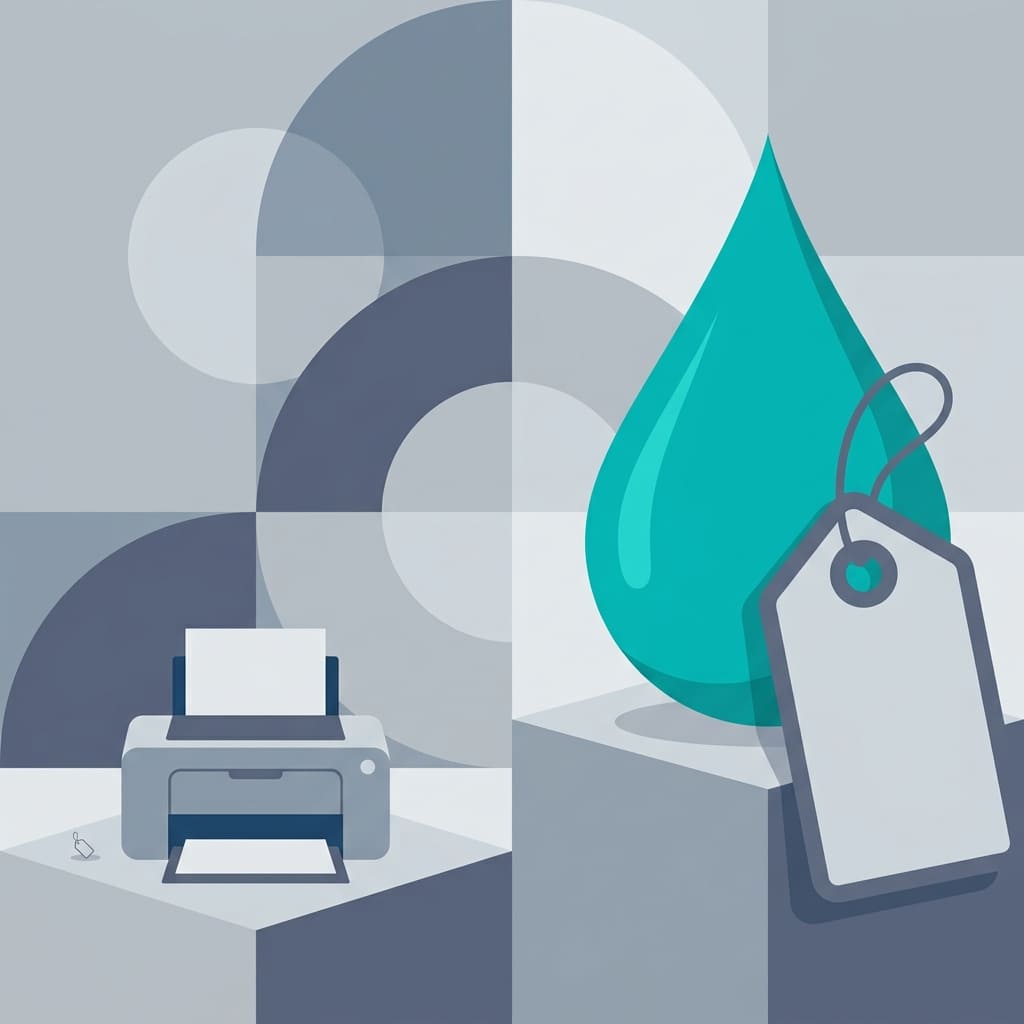
Ounce for ounce, some printer ink costs more than vintage champagne. Manufacturers sell printers near cost (sometimes at a loss) because the real business model is the ink itself. This is called a “razor and blades” model, and it’s one of the most successful pricing strategies of the last century.
Oddly enough, this same psychological trap appears in 13 Money Mistakes That Feel Smart in the Moment but Cost You Later. In fact, the mistake people make with printer ink is structurally identical to a much bigger financial decision many of us make in our twenties, one that feels frugal in the moment but quietly costs tens of thousands of dollars over a decade. The reason is surprisingly counterintuitive.
3. Cereal (Name Brand vs. Store Brand)
In most cases, name brand and store brand cereal are manufactured in the same facilities, sometimes on the same production line. The difference is packaging and marketing spend, not ingredients. Consumer Reports (https://www.consumerreports.org) has documented this overlap repeatedly across categories.
4. Extended Warranties
Extended warranties are one of the highest-margin products retailers sell, often more profitable than the item itself. The reason is simple: the probability of failure within the warranty window is calculated precisely by actuaries, and the price is set well above that risk.
There’s another hidden layer to this story. We uncovered it while researching 14 Things Frugal People Never Waste Money On (Even When They Can Afford Them), and it explains why two people with identical incomes can end up with dramatically different financial outcomes over twenty years. One small recurring decision, repeated enough times, compounds into a surprising gap.
5. Prescription Glasses
A handful of companies control a large share of the global eyewear market, which is part of why frames that cost a few dollars to produce can retail for hundreds. Independent reporting from outlets like The Wall Street Journal (https://www.wsj.com) has traced this consolidation in detail.
6. Greeting Cards
The paper and printing cost for a typical greeting card is often under fifty cents. You’re not paying for cardstock. You’re paying for the emotion attached to the moment, a pricing strategy called “value based pricing,” where cost has almost nothing to do with price.
7. Bagged Salad
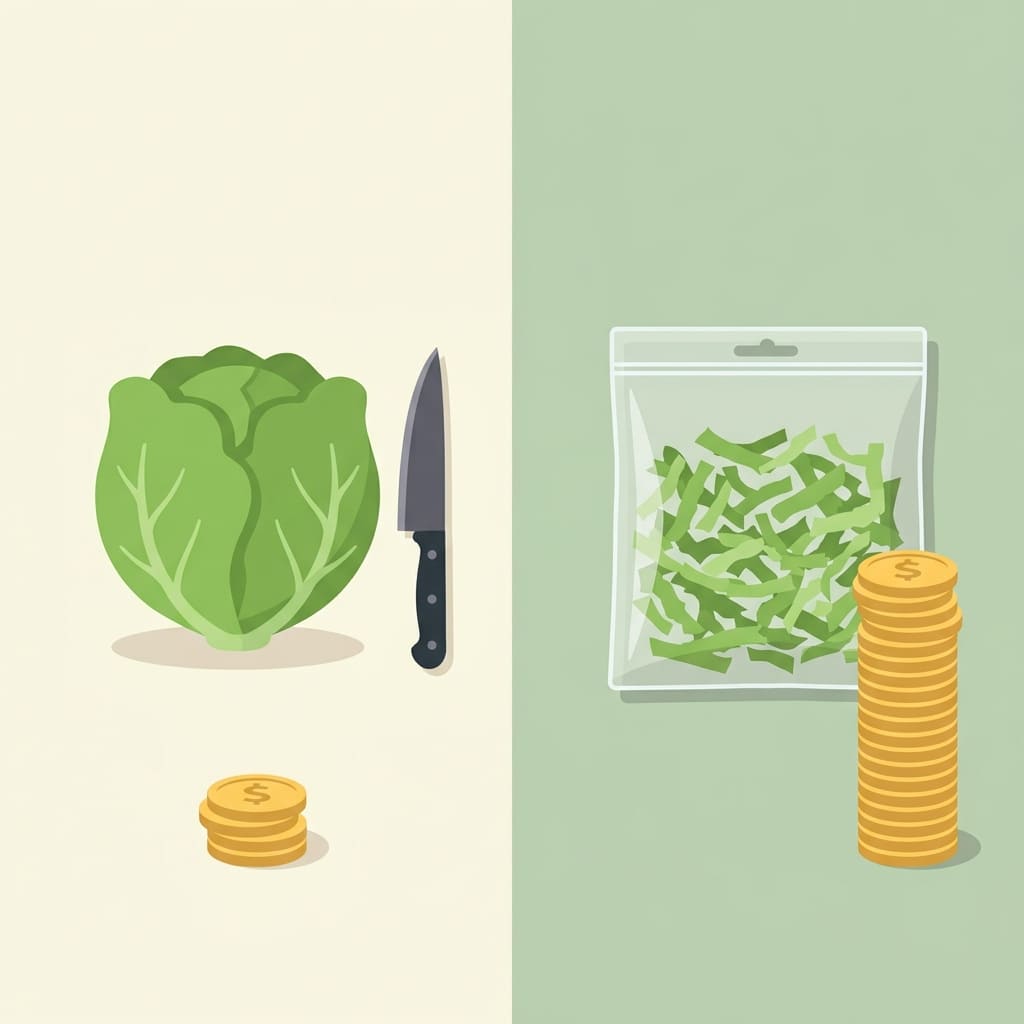
Pre-washed, bagged salad can cost two to three times more per pound than buying the same vegetables whole and washing them yourself. You’re paying for convenience, which is fine, as long as you know that’s the trade you’re making.
This raises an interesting question that deserves its own discussion: why do intelligent, financially literate people repeatedly pay convenience premiums without noticing, even when they have the time to avoid them? That’s exactly what we explore in 11 Clever Ways People Saved Money Before Apps, Coupons, and Cashback Programs Existed, and the answer has less to do with laziness than most people assume.
8. Designer Vitamins
Most vitamins, regardless of brand, are manufactured by a small number of supplement factories. The “premium” brand on the label rarely reflects a different formulation, just a different markup.
9. Bottled Smoothies and Cold-Pressed Juice
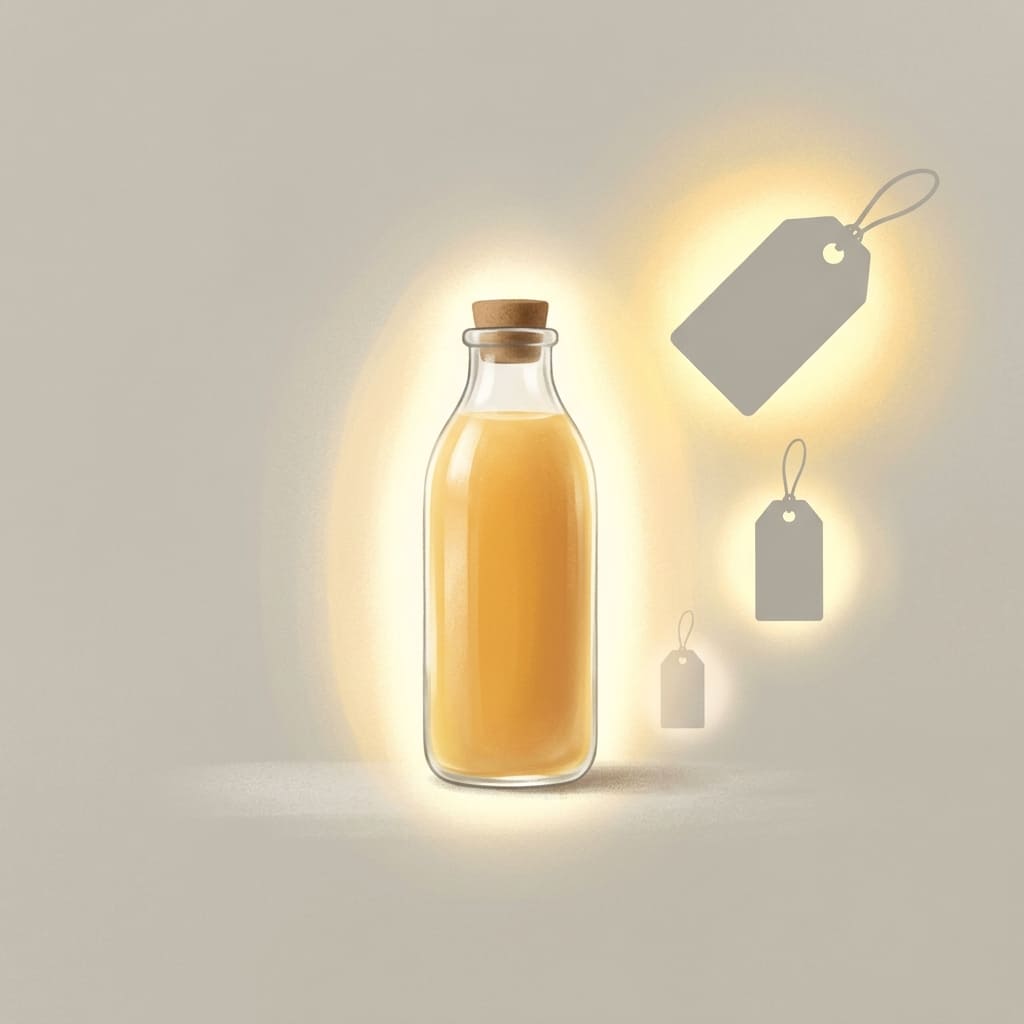
A bottle of cold-pressed juice can run $8 to $12, yet the raw produce inside rarely costs more than $2. The premium isn’t really about nutrition. It’s about the story on the label: words like “cleanse,” “detox,” and “cold-pressed” trigger a halo effect, where one positive-sounding word makes the entire product feel healthier and more valuable than it is.
But that’s not the most important part. The same halo effect quietly shapes far bigger purchases, including the financial products people choose based on words like “premium” or “elite” tier, often without comparing what’s actually inside.
10. Phone Chargers and Cables
Brand-name charging cables can cost five to ten times more than functionally identical third-party cables, despite drawing from the same handful of factories overseas. The markup survives because of a subtle fear: the worry that a cheaper cable might damage an expensive device. Companies amplify this fear deliberately. It’s not really a product cost. It’s an insurance premium against anxiety.
11. Movie Theater Snacks
Popcorn markups at theaters can exceed 1,000%, which sounds absurd until you understand the business model. Ticket sales barely cover the cost of running a theater. Concessions are where the actual profit lives. This is the same razor and blades logic from printer ink, just wearing a different costume.
12. Name-Brand Pain Relievers
Generic ibuprofen and acetaminophen use the exact same active ingredient, at the exact same dosage, regulated under the same FDA (https://www.fda.gov) standards as their brand-name counterparts. The only meaningful difference is the box. Pharmacists know this. It’s one of the most reliable “overpay” categories in any drugstore.
13. Pre-Cut Fruit
A container of pre-cut pineapple or melon often costs three to four times more per pound than the whole fruit. The convenience tax here is steep, and unlike bagged salad, the cut fruit also spoils faster, meaning you’re sometimes paying more for less.
14. Hotel Minibars and Room Service
Markups of 300% to 400% are common, not because the products are special, but because the situation removes your ability to comparison shop. This is a pricing strategy economists call captive market pricing, and it shows up far beyond hotel rooms: airports, stadiums, and amusement parks all use it.
Most people stop their analysis here. That’s a mistake. One overlooked factor completely changes how this same captive pricing logic plays out in personal finance, particularly with one financial product millions of people sign up for without ever comparing alternatives. It’s the central idea explored in 13 Money Mistakes That Feel Smart in the Moment but Cost You Later.
15. Branded Cleaning Products
Many “specialty” cleaners (glass cleaner, multi-surface spray, even some stain removers) share nearly identical chemical formulations. The differentiation is almost entirely in scent and packaging design.
16. Subscription Box Services
Subscription boxes rely on a psychological quirk called the sunk cost fallacy. Once you’ve paid for three months upfront, canceling feels like “wasting” money already spent, even though continuing is what actually wastes more. This single bias quietly props up an enormous share of recurring subscription revenue across the entire economy.
The Pattern Hiding Behind All 16
Look back at this list and a pattern emerges. Almost none of these markups exist because the product is genuinely better. They exist because of:
- Anchoring (comparing price to the wrong reference point)
- Convenience premiums (paying to skip a small effort)
- Captive market pricing (paying more because you can’t shop around)
- The price-quality illusion (assuming expensive means better)
Once you can name these four patterns, you start seeing them everywhere, not just in grocery aisles, but in insurance policies, banking fees, and investment products that quietly skim returns over decades.
That’s the strange thing about overpaying. It rarely feels like a single bad decision. It feels like dozens of small, reasonable ones.
The Real Takeaway
You don’t need to become a relentless penny-pincher to fix this. You just need to ask one question before any purchase: “Am I paying for the product, or am I paying for the story, the convenience, or the absence of an alternative?”
That single question, asked consistently, will save most people more money than any budgeting app ever will.
And here’s the quietly fascinating part: the same four pricing patterns above also explain a surprising number of historical money-saving habits that disappeared once convenience culture took over. People once solved these exact problems with remarkably clever workarounds, long before cashback apps existed.
Share This With Someone Who Needs It
If you made it this far, you probably just realized you’ve been paying a “convenience tax” on at least three things on this list. That’s normal. The system is built that way.
So do the financially responsible thing: ruin someone else’s grocery store experience too. Send this to a friend, post it where your most frugal (or least frugal) friend will see it, and let them discover their own popcorn-shaped blind spot.