
Here’s an uncomfortable question: if diversification is so important, why do so many diversified portfolios still underperform?
You’ve heard it a thousand times. Don’t put all your eggs in one basket. Spread your risk. Own different asset classes. It’s good advice, technically. But it’s also the advice every financial advisor gives because it’s easy to say and hard to argue with, not necessarily because it’s the thing that separates good investors from great ones.
There’s a metric that matters more, and almost nobody outside of professional trading desks talks about it with beginners. It’s called sequence of returns risk, and once you understand it, you’ll never look at your portfolio the same way again.
Why Average Returns Lie to You
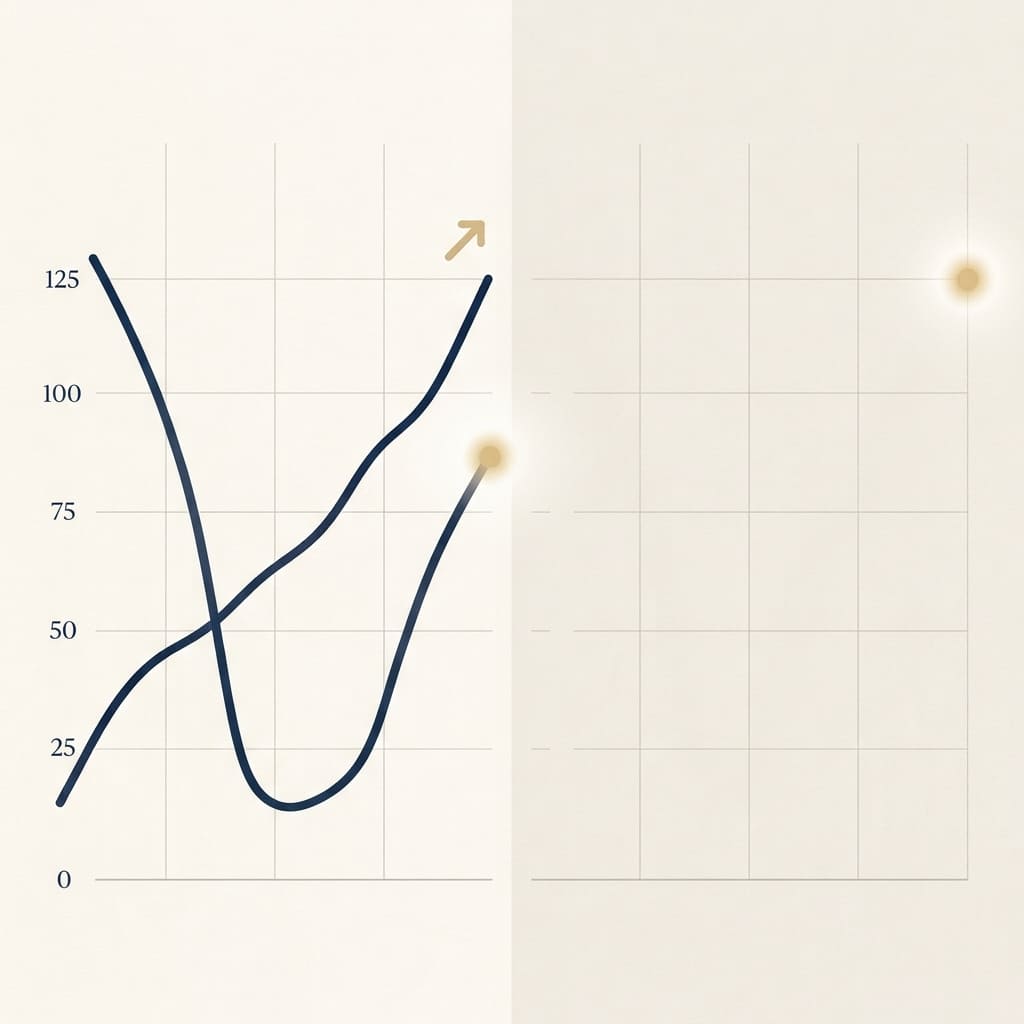
Imagine two investors. Both put in $100,000. Both average a 7% annual return over 20 years. On paper, identical outcomes, right?
Wrong. Spectacularly wrong, depending on the order those returns happen in.
If Investor A gets hit with a brutal market crash in year one and slowly recovers, while Investor B enjoys strong early gains and a rough patch at the end, they can end up with wildly different final balances, even though their average annual return is mathematically the same.
This is sequence of returns risk, and it’s the silent variable that determines whether your retirement plan actually works or quietly falls apart. Most retirement calculators don’t model it properly. Most beginners have never heard the term. And most financial content focuses obsessively on “what to invest in” while ignoring “when the bad years happen relative to your withdrawals.”
The Withdrawal Trap Nobody Warns You About
Here’s where it gets dangerous. Sequence risk barely matters while you’re accumulating wealth. You’re adding money regularly, so a downturn just means you’re buying shares on sale.
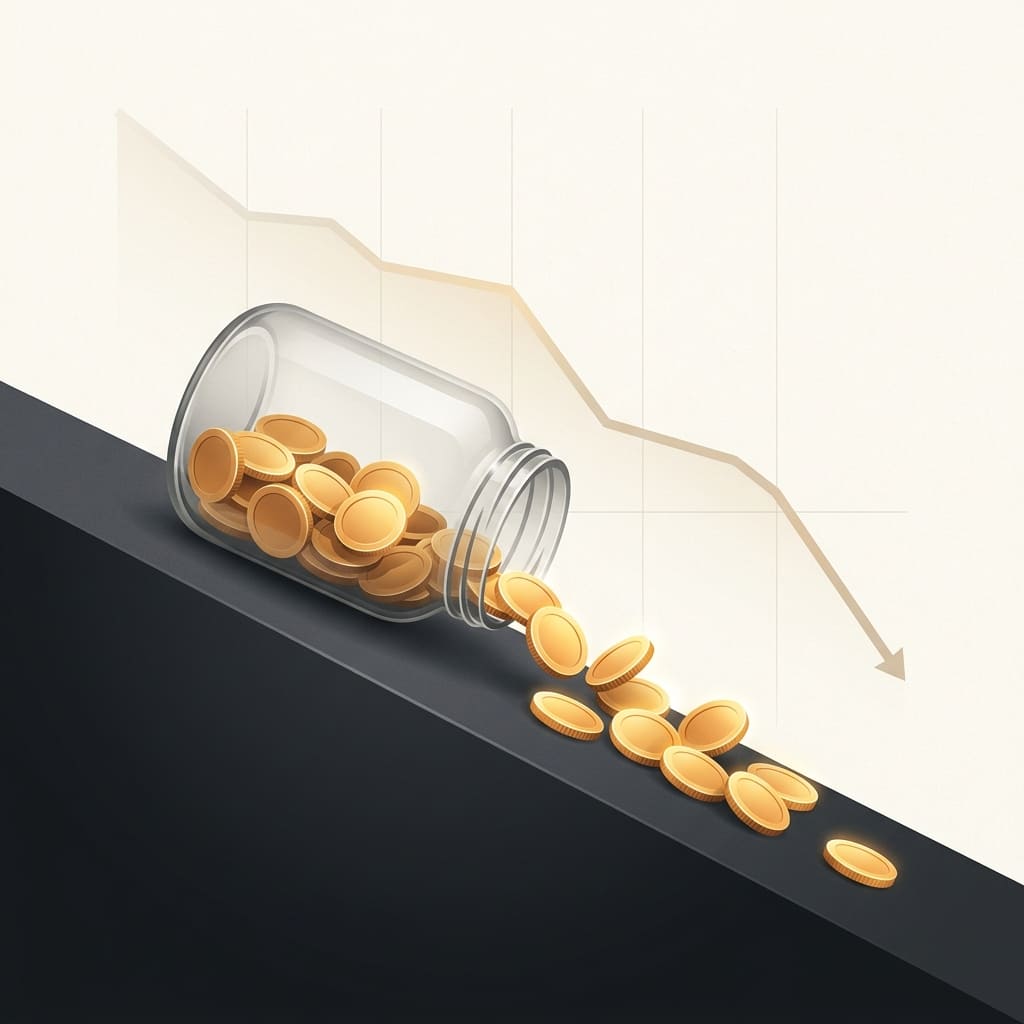
But the moment you start withdrawing money, the math flips entirely. Selling assets during a downturn locks in losses permanently. You’re not just down on paper anymore, you’ve removed capital that can never recover and compound again.
This single mechanic explains why two retirees with identical portfolios and identical withdrawal rates can have completely different outcomes, one running out of money in year 18, the other still comfortable in year 30. The difference wasn’t skill. It wasn’t even asset allocation. It was timing they had zero control over.
Most people stop their analysis here, satisfied that diversification alone protects them. That’s a mistake. There’s an entire category of overconfidence that creeps in once a bull market runs long enough, and it quietly sets investors up for exactly this kind of blindside. We mapped out the full pattern in 7 Portfolio Mistakes Almost Everyone Makes During Bull Markets (And Doesn’t Realize Until It’s Too Late), and the uncomfortable part is how invisible the mistake feels while you’re making it.
Why Wall Street Doesn’t Lead With This
It’s not a conspiracy. It’s simpler than that. Sequence risk is hard to explain in a single sentence, hard to put on a pamphlet, and hard to sell a product around. “Diversify” fits on a bumper sticker. “Your outcome depends partly on the random order of market returns relative to your personal withdrawal schedule” does not.
So the industry defaults to the simpler story. Meanwhile, the investors who actually study this stuff, pension fund managers, actuaries, the people who write for places like Morningstar [https://www.morningstar.com] and Bogleheads [https://www.bogleheads.org], treat sequence risk as a core planning variable, not a footnote.
There’s a reason this concept rarely makes it into beginner content: it doesn’t have a clean villain or a simple fix. It requires nuance. But nuance is exactly what separates people who build lasting wealth from people who get lucky for a decade and then get blindsided.
A Mental Model That Changes Everything
Here’s a way to think about it that most people find genuinely useful: imagine your portfolio’s value over time not as a smooth line, but as a path through terrain with unpredictable cliffs. The cliffs (market downturns) exist whether you’re accumulating or withdrawing. But if you’re climbing toward the cliff with a backpack full of cash you keep adding to, a fall barely slows you down. If you’re descending past that same cliff while removing supplies from your pack at each step, the fall can end the hike entirely.
The asset allocation is the terrain. The withdrawal timing is whether you fall near the cliff or far from it. Most investors only ever study the terrain.
This raises a question almost nobody asks early enough: if the danger isn’t really about which assets you own but when bad luck strikes, what can an investor actually control?
More than you’d think. You just have to control the right levers.
The Levers That Actually Matter
The first lever is withdrawal flexibility. Investors who rigidly withdraw the same percentage every year, regardless of market conditions, are the most exposed to sequence risk. Investors who build in flexibility, trimming withdrawals slightly during downturns and easing up during strong years, dramatically reduce the odds of running dry early. This sounds obvious once stated, yet almost nobody builds it into their actual plan until it’s too late.
The second lever is the cash buffer. Keeping one to two years of expenses in cash or short-term bonds means you’re never forced to sell stocks at the bottom of a crash just to pay your bills. It feels inefficient while markets are calm. It becomes the single most important decision you ever made the moment a downturn hits during your early retirement years.
The third lever is the one nobody wants to hear: the age at which you start relying on your portfolio. Delaying withdrawals, even by a few years, dramatically narrows the window in which a bad sequence can do permanent damage. This isn’t about working forever. It’s about understanding that the first five years of withdrawals matter more than almost anything else you’ll do as an investor.
There’s a strange paradox buried in here. The investors most obsessed with maximizing returns during accumulation are often the same ones who completely ignore sequencing during distribution, the phase where it matters most. Why does this happen even among people who genuinely know better? That question alone could fill a separate article, and in fact it does: it’s one of the central ideas explored in The 10 Investing Rules Nobody Teaches Beginners (But Every Successful Investor Eventually Learns).

The Hidden Cost of Learning This the Hard Way
Here’s the part that should genuinely bother you. Most people don’t learn about sequence of returns risk from a book or an advisor. They learn it by living through it, usually at the worst possible moment, usually with money they can’t afford to lose twice.
There’s a strange pattern that shows up again and again in financial history. People who retired in 2000 or 2008 right before major downturns, despite having “textbook” diversified portfolios, ended up in materially worse positions than people who retired just a few years earlier or later with the exact same savings and asset mix. Same discipline. Same diversification. Wildly different outcomes, purely because of when the cliffs showed up.
This is the uncomfortable truth at the heart of personal finance: discipline and diversification reduce risk, but they don’t eliminate the role of timing you cannot control. The investors who internalize this early build in protections. The investors who don’t find out the hard way, often after it’s too late to fully recover.
If that sounds like an expensive lesson to learn through experience rather than reading about it in advance, that’s exactly the idea behind 11 Expensive Stock Market Lessons You Can Learn Today Instead of Paying for Later. Sequence risk is one entry on a much longer list of things that separate investors who got lucky from investors who got it right.

What This Actually Means For You
You don’t need to become an actuary. You don’t need to predict the next crash. What you need is to stop treating “diversify and hold” as a complete plan and start treating it as step one of a longer conversation.
Ask yourself: when do I plan to start relying on this money, and what happens to my plan if a major downturn hits in the first five years of that window? If you don’t have a confident answer, you’ve just found the single most valuable thing to research this week, more valuable than picking the next hot stock or timing the next dip.
The investors who outperform over decades aren’t usually the ones who pick the best assets. They’re the ones who understand that when matters as much as what.
The Quote-Worthy Takeaway
Diversification protects you from being wrong about what you own. Sequencing awareness protects you from being wrong about when you needed it most. Most people only ever learn the first lesson.
That sentence alone is worth screenshotting, because it’s the kind of idea that changes how you think about every financial decision that follows.
So here’s a small, slightly cheeky request: if this rewired even one assumption you’ve held about investing, send it to the one friend who still thinks “diversified” means “safe.” They’ll either thank you in ten years or argue with you right now. Either way, you’ll have started a much better conversation than the one Wall Street usually wants you to have.