
There’s a version of you, five years from now, who already learned these lessons. The hard way. With real money.
This article is for the version of you who’d rather skip that part.
Here’s the strange thing about investing mistakes: almost none of them feel like mistakes while you’re making them. They feel like common sense. They feel like “just being careful.” That’s what makes them expensive. You don’t get a warning label. You get a brokerage statement, years later, that quietly tells you what your caution actually cost.
So let’s go through eleven of the most expensive lessons the market teaches, the ones that usually arrive disguised as good decisions.
1. “Playing It Safe” Is Often the Riskiest Move on the Table
Every investor knows that cash feels safe. It doesn’t go down. It doesn’t make headlines. It just sits there.
But here’s the part almost nobody calculates: a dollar held in cash for ten years isn’t neutral. It’s losing a quiet, compounding war against inflation the entire time. According to the U.S. Bureau of Labor Statistics (https://www.bls.gov), inflation doesn’t pause just because you’ve decided to wait for “more certainty” before investing. The danger isn’t that cash loses value fast. It’s that it loses value invisibly, so the cost never shows up as a single painful event you can point to.
This is the first paradox of investing: the choice that feels the least risky in the moment is frequently the most expensive choice over a decade.

2. The Mistake Hiding Inside “Smart” Diversification
Most people are taught that diversification automatically equals safety. Spread your money around, the logic goes, and you’ll never get badly hurt.
But there’s a version of diversification that does the opposite of what you think it’s doing. If you own twelve different funds that all secretly hold the same 50 large tech stocks, you don’t have twelve different bets. You have one oversized bet wearing twelve different costumes. You’ve added complexity without adding protection.
Even Warren Buffett, arguably the most successful investor alive, has openly challenged the instinct to over-diversify, suggesting that scattering money across dozens of things you don’t deeply understand can be its own kind of risk rather than a cure for it. The uncomfortable question this raises: are you actually diversified, or have you just made your portfolio harder to understand without making it safer? That’s the exact trap explored in depth in The Sneaky Way “Diversifying” Your Portfolio Can Actually Increase Your Risk, because the mechanics behind it explain why two “balanced” portfolios can carry wildly different real risk while looking identical on paper.
3. Your Brain Is Wired to Sabotage Your Returns
Here’s a fact that should be taught in every high school: researchers studying tens of thousands of real brokerage accounts found that investors are far more likely to sell their winning stocks than their losing ones, even when the losers are the ones actually hurting them. UC Berkeley researcher Terrance Odean analyzed thousands of brokerage accounts and found investors were roughly 1.5 times more likely to sell winning positions than losing ones, even when holding the losers would have produced worse returns.
Behavioral economists call this the disposition effect, and it comes down to a brutally simple miscalibration in how your brain processes gains and losses. Losses just hurt more than equivalent gains feel good. So you lock in the good feeling early (selling winners) and avoid the bad feeling for as long as possible (holding losers, hoping they’ll recover).
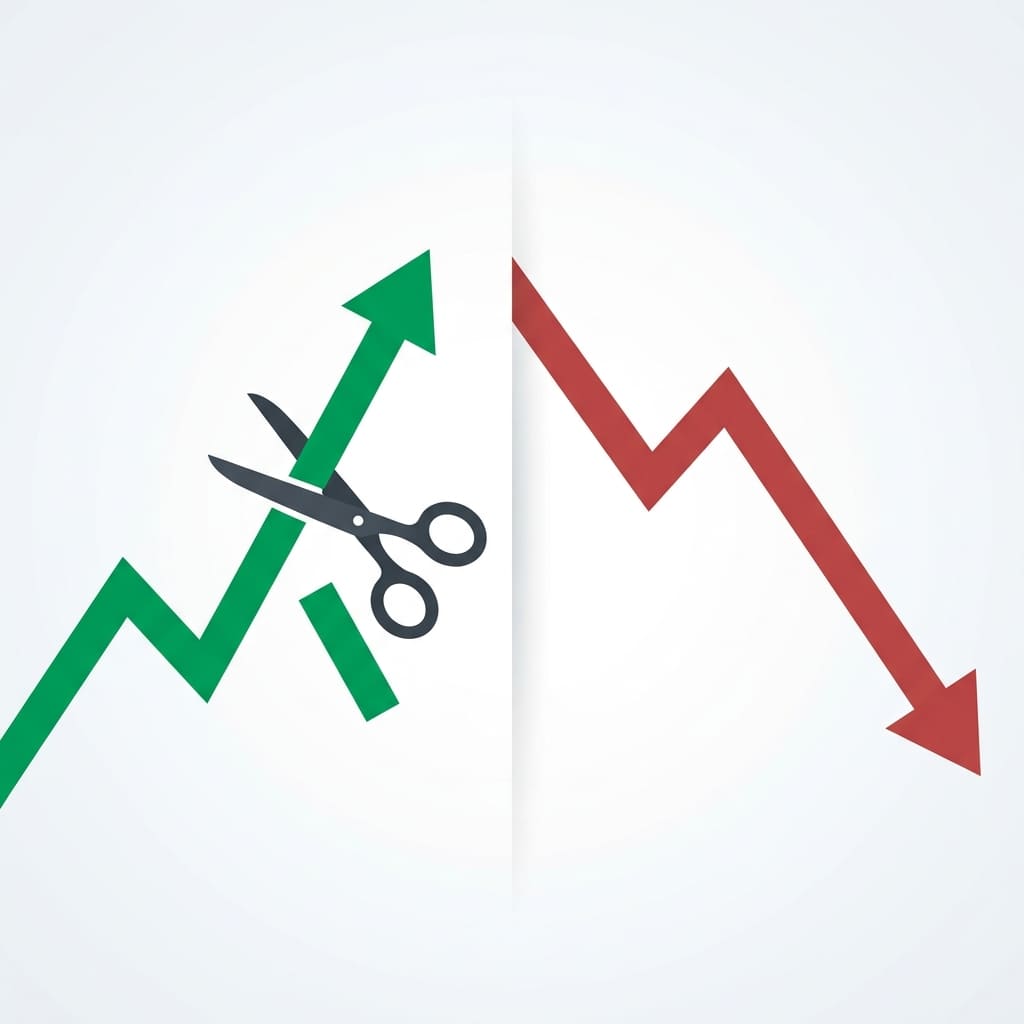
The result is a portfolio that’s been quietly engineered, one emotional decision at a time, to do the opposite of what actually builds wealth: cutting winners short and letting losers run.
4. Boring Is a Feature, Not a Flaw
There’s a strange status game hidden inside investing. The stocks and strategies people talk about at parties are rarely the ones quietly making money for the people who never mention them.
This is the central tension behind a question worth sitting with: why do the most reliable wealth-building moves rarely make for good conversation? Index funds tracking something like the S&P 500 don’t generate excitement. Automatic monthly contributions don’t generate excitement. Paying off high-interest debt before investing doesn’t generate excitement. And yet these unglamorous choices are responsible for more real, durable wealth than almost anything that does trend on social media. That disconnect, between what’s exciting and what actually works, is exactly what’s unpacked in 7 Wealth-Building Opportunities Most People Ignore Because They Don’t Look Exciting, because the pattern goes deeper than just index funds.
5. The Fee You Can’t See Is the One Costing You the Most
A 1% annual fee sounds small. It is not small.
Run the math over 30 years on a retirement account, and that “small” 1% can quietly consume a six-figure chunk of your final balance, simply because it compounds against you every single year, the same way returns compound for you. You can check actual fund expense ratios for free on Morningstar (https://www.morningstar.com) before investing a single dollar, and most people never do.
The paradox here: the most damaging costs in investing are rarely the ones you notice. They’re the ones quietly subtracted before you ever see your statement.
6. Time in the Market Beats Timing the Market, But Not for the Reason You Think
Everyone has heard “time in the market beats timing the market.” Most people assume this is just encouragement to be patient. It’s actually a mathematical fact about how compounding works.
Missing even a handful of the market’s best days, days that often arrive right after the scariest drops, can permanently dent your long-term returns. Studies tracking the S&P 500 repeatedly show that a small number of explosive up days produce a disproportionate share of total long-term gains. Investors who panic-sell during a downturn don’t just miss the bad days. They frequently miss the best days too, because those best days tend to cluster right around the worst ones.

7. The Mistake That Doesn’t Look Like a Mistake at All
Some of the most expensive investing errors are barely visible because they don’t feel like errors. They feel like discipline.
Checking your portfolio every day. “Just to stay informed,” refreshing prices during a market dip. Tweaking your allocation slightly every time you read a worrying headline. None of these feel reckless. They feel responsible. But research on investor behavior consistently shows that more frequent checking correlates with more emotional trading, and more emotional trading correlates with worse long-term returns.
This is the trap explored in The Silent Portfolio Killers: 8 Small Investing Mistakes That Compound Into Massive Losses, because the habits that quietly erode a portfolio rarely look like recklessness from the inside. They look like attentiveness.
8. You Are Not Behind. You Are Comparing Yourself to a Highlight Reel
Social media has created a strange new investing hazard: everyone shares their wins. Almost nobody shares their losses, their false starts, or the years they made nothing.
This creates a distorted sample size in your head. You start to believe that everyone else is finding 10x opportunities while you’re stuck earning a “boring” 8% annual average. In reality, the people quietly compounding at 7 to 10% a year for two or three decades are usually the ones who end up wealthy, while many of the loud winners from any given year quietly disappear from the conversation a year later. You just don’t see that part.
9. Risk and Volatility Are Not the Same Thing, and Confusing Them Is Costly
Volatility is a stock’s price bouncing around. Risk is the chance you lose money permanently. These sound similar. They are not.
A stock that swings wildly in price but that you fully understand, hold for decades, and never need to sell during a downturn can be lower risk than a “stable-looking” investment you don’t understand and might panic-sell at the worst possible moment. Confusing the two causes investors to avoid genuinely good long-term opportunities purely because the ride feels uncomfortable, and to feel falsely safe in investments that are calm right up until they aren’t.

10. The Tax Lesson Almost Nobody Learns Until It’s Too Late
Selling an investment in a taxable account triggers a tax bill, full stop. But here’s the detail that surprises people: short-term gains (assets held under a year) are typically taxed at a meaningfully higher rate than long-term gains in most tax systems, including under current IRS rules (https://www.irs.gov).
This means two investors can pick the exact same winning stock, hold it for slightly different lengths of time, and end up with noticeably different amounts of money in their pocket after taxes, purely because of timing they didn’t think mattered. It’s one of the cheapest lessons to learn in advance and one of the most expensive to learn by accident.
11. The Investors Who Win Long-Term Treat Mistakes as Data, Not Identity
Here’s the quiet difference between people who recover from a bad investment and people who don’t: the ones who recover treat the loss as information. The ones who don’t treat it as a verdict on their intelligence.
This single mental shift changes everything downstream. An investor who says “that trade taught me I was overconfident about timing” adjusts their behavior. An investor who says “I’m just bad at this” often either quits entirely or, just as dangerously, doubles down emotionally to prove something to themselves. Neither response is about the market. Both are entirely about identity. Forums like Bogleheads (https://www.bogleheads.org) are full of investors who openly discuss their early mistakes precisely because treating errors as tuition, rather than as failure, is what let them keep playing the game long enough to win it.
The One-Sentence Summary Worth Remembering
Almost every expensive investing mistake shares one quality: in the moment, it feels like the responsible choice.
That’s worth sitting with. Caution that isn’t actually informed, diversification that isn’t actually diversified, attentiveness that isn’t actually helping. The market doesn’t punish people for taking risks. It punishes people for misunderstanding which choices are actually risky.
The investors who do well over decades aren’t the ones who avoided every mistake. They’re the ones who figured out, usually earlier than most, which of their “safe” instincts were quietly the most expensive ones in the room.
Before You Go
If even one of these eleven lessons made you pause and think “wait, I’ve been doing that,” you already got more value from this article than most people get from a financial seminar that costs $500.
So here’s the only ask: if this rearranged something in your head, send it to one person who’s currently making one of these mistakes without knowing it. Not because sharing articles is some noble act, but because watching a friend learn this for free is a lot more fun than watching them learn it the expensive way.